


Looking for the perfect card game for your next big get-together? Meet the Hands and Foot card game, a social, team-based game that’s easy to learn but offers hours of rowdy fun. It shares some DNA with Rummy but introduces a fantastic twist that keeps everyone engaged until the very last card is played. To find more, check on login DORY189
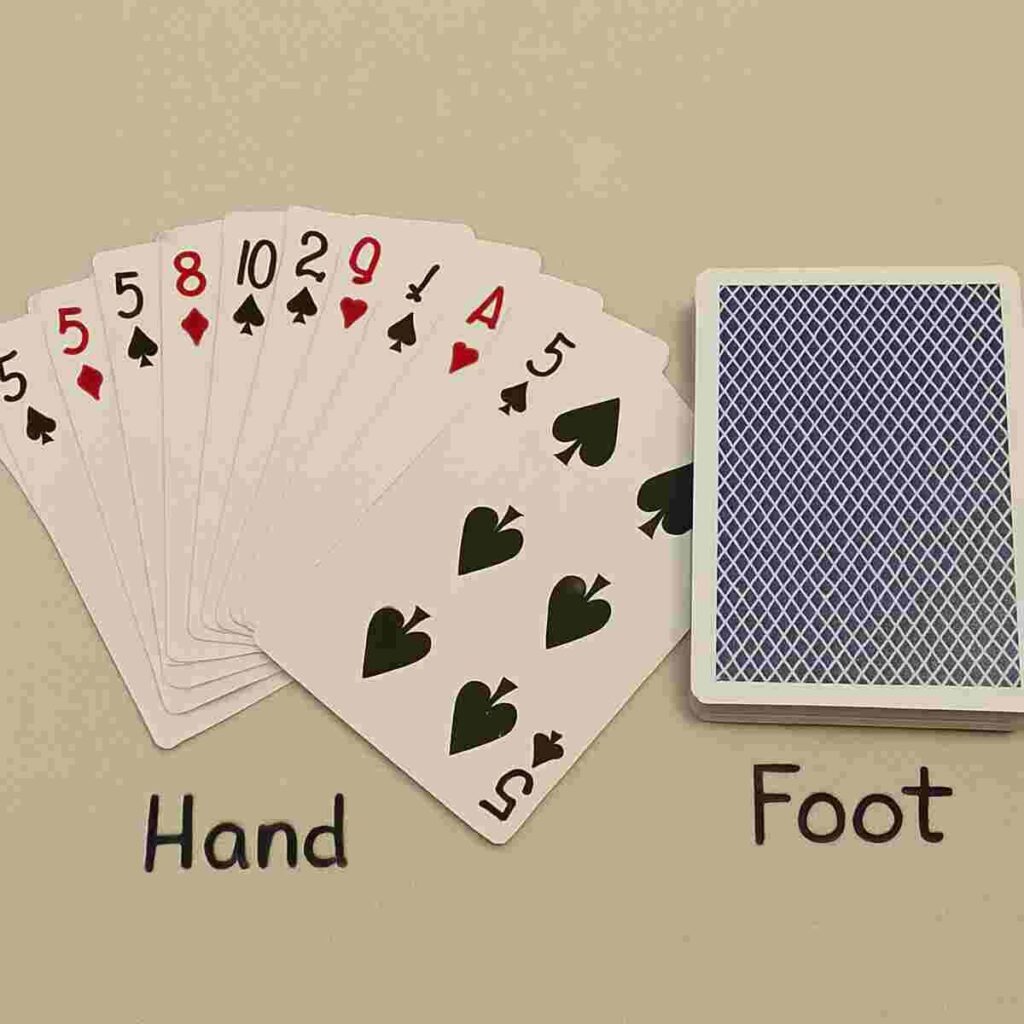
The game’s name hints at its most unique feature: every player starts with two separate stacks of cards. You begin by playing from your initial “Hand,” but once that’s empty, you get to pick up your “Foot.” Think of it as a secret backup pile of cards, a second wind that can completely change the course of the game and give every player a fighting chance.
Unlike games where the main goal is simply to get rid of your cards first, the objective here is to score the most points. You do this by working with a partner to create “melds,” which are sets of three or more cards of the same rank, laid face-up on the table. The bigger and more numerous your melds, the higher your team’s score.
This guide walks you through everything from setup to scoring with simple, step-by-step instructions. By the end, you’ll be ready to confidently deal the cards and lead your very first game tonight.
The Essentials: What You’ll Need to Play Hand and Foot Tonight
Before you can play, you’ll need to gather several standard decks of playing cards, including the Jokers. Hand and Foot is a type of Canasta game that uses a lot of cards, and the rule for how many decks to use is simple: always use one more deck than the number of players.
- 2 players: 3 decks
- 4 players: 5 decks
- 6 players: 7 decks
Within these shuffled decks, two types of cards are especially powerful: the Jokers and all of the 2s. These are known as wild cards. A wild card can stand in for any other card you might need. Set aside the red 3s (they are penalty cards and not used in play) and remember that Jokers and 2s are your best friends in this game.
Finally, grab a pen and a pad of paper. A game of Hand and Foot is played over several rounds, and scoring happens after each one. You’ll want a dedicated scoresheet to track your team’s points as you go. With your cards and scoresheet ready, it’s time to learn the setup.
The Deal: How to Correctly Set Up Your ‘Hand’ and ‘Foot’
The dealing process in the Hand and Foot card game is where it gets its unique name. After all the decks are shuffled together to form one large draw pile, the dealer gives each player two separate stacks of 11 cards, both dealt face-down. The remaining cards are placed in the center of the table to become the main stock, or draw pile.
Once everyone has their two piles, it’s time to get oriented. The first stack of 11 cards is your starting Hand, which you can pick up and look at immediately. The second stack of 11 cards is your Foot, and you should place it to the side, still face-down. You will hold the cards from your Hand, but the Foot pile remains on the table, untouched for now.
This brings us to the single most important rule for beginners: you are not allowed to look at the cards in your Foot pile. Not even a quick peek! The contents of your Foot must remain a complete mystery until you have played every single card from your starting Hand. Breaking this rule is a common mistake, so make sure everyone at the table understands that the Foot is off-limits.
Think of your Foot as a secret backup. After you successfully play all the cards from your main Hand, you earn the right to pick up your Foot and continue playing with a fresh set of 11 cards. It’s a huge advantage that can turn the tide of a round. With your Hand sorted and your Foot waiting patiently, you’re ready for your first turn.
Your First Turn: The Simple 3-Step Gameplay Loop
Every single turn in the Hand and Foot card game follows a simple three-part rhythm. Committing this to memory is the key to playing with confidence. On your turn, you will always perform these actions in order:
- Draw Cards (from one of two sources).
- Meld Cards (this is optional).
- Discard One Card (a mandatory step to end your turn).
Your turn always begins by drawing cards, and you have two distinct choices. The first and most common option is to take the top two cards from the main Stock Pile—the large, face-down stack in the center of the table. Your second, more strategic option is to pick up the entire Discard Pile. This is the face-up stack of cards that players have discarded on previous turns. Taking the pile can be a powerful move, but you can’t just take the top card; you must take them all.
After you have drawn your cards and played any sets you might have, you must end your turn by discarding. To do this, choose one card from your hand and place it face-up next to the Stock Pile, creating or adding to the Discard Pile. Once you’ve discarded, your turn is officially over, and play proceeds to the person on your left.
The Heart of the Game: How to ‘Meld’ and Create Sets
That optional middle step of your turn, “melding,” is where you score all your points. Melding is laying down sets of cards with the same rank (the number or face value) face-up on the table. For example, all 7s are the same rank and all Kings are the same rank, regardless of their suit. These melds stay on the table for the rest of the round, creating a public display of your team’s progress.
To start a new meld, you need at least three cards of the same rank. Let’s say you are holding three 10s in your hand; you can immediately play them in front of you as a new meld. On a future turn, if you or your partner gets another 10, you can add it to that existing pile. This is how you grow your small sets into the large “books” needed to score big.
What if you only have two Jacks? This is where wild cards come in handy! In Hand and Foot, both the Jokers and the 2s are considered wild. A wild card is a powerful substitute that can stand in for any card you need. For instance, you could use your two Jacks and a Joker to create a valid three-card meld on the table.
Using a wild card is a fantastic way to build your melds faster, but it comes with a special consequence. Any meld that contains a wild card—even just one—is considered a “dirty” meld. In contrast, a meld made up of only natural cards is called a “clean” meld. This distinction is crucial, as it directly impacts your ability to go out and how you calculate your final score.
What Are ‘Clean’ and ‘Dirty’ Books and Why Do They Matter?
As you and your partner add cards to your melds, you’re working toward a major goal: creating a Book. In Hand and Foot, a book is a special meld that contains exactly seven cards of the same rank. Once a meld reaches seven cards, it is considered complete. You’ll typically square the pile up and place a card on top to signify its status—a red card for a clean book and a black card for a dirty one. These completed books are the primary way you rack up big points.
So, what exactly makes a book “clean”? Building on the idea of a clean meld, a Clean Book is one that contains seven natural cards, with absolutely no wild cards mixed in. For example, if you manage to collect and meld seven 8s, you’ve made a clean book. These are more challenging to complete but are worth significantly more points, making them a high-priority target.
In contrast, a Dirty Book is any seven-card book that includes at least one wild card. For instance, a pile of five Kings combined with two Jokers makes a dirty book. While they are worth fewer points than their clean counterparts, they are much easier and faster to build. Using wilds strategically helps you complete books quickly and get closer to ending the round.
This distinction isn’t just about points; it’s fundamental to winning. To end a round, a move known as “going out,” your team must have completed a minimum of one clean book and one dirty book. You could have a dozen dirty books on the table, but without at least one clean one, your team cannot go out. This rule forces you to balance the quick strategy of using wilds with the more patient effort of building a perfect, clean set.
The Power of the Discard Pile: When and How to Pick It Up
Instead of drawing two fresh cards from the stock pile to start your turn, you have another, more powerful option: taking the entire discard pile. This move can dramatically accelerate your game, giving you a huge number of cards to create new melds and complete your books. However, you can’t just grab the pile whenever you want; there are specific rules you must follow.
The rules for this move are strict but simple, revolving around the single card sitting on top of the pile. To legally pick up the discard pile, you must:
- Have two natural (non-wild) cards in your hand that match the top card of the discard pile.
- Immediately use your two cards and that top card to start a new meld or add to an existing one.
For example, if the top card is a 10, you must have at least two 10s in your hand. You’d show your two 10s, take the entire pile, and then immediately play the three 10s together on the table before making any other moves.
So, why take the risk? The reward is access to all the cards buried in the pile, which might contain exactly what you and your partner need. The risk, however, is that you also have to take all the junk cards along with it, potentially filling your hand with cards you can’t use. A large pile can also contain penalty cards (like red 3s) or prevent you from getting to your all-important Foot. Weighing this risk-versus-reward is your first real taste of Hand and Foot strategy.
Unlocking Your Backup: The Big Moment of Picking Up Your ‘Foot’
Throughout the early part of the game, your main goal is to get rid of all the cards in your starting ‘Hand.’ The moment you successfully play or discard the very last card from that initial hand, you’ve earned your reward: you get to pick up your ‘Foot’ pile. This is one of the most exciting moments in the game and feels like getting a second wind.
What happens next is the fun part. You immediately pick up your ‘Foot’ pile, and it becomes your new hand. You don’t have to wait for your next turn! If you played your last card from the ‘Hand’ to make a meld (and didn’t discard), you can even continue your turn by playing cards from your newly acquired ‘Foot.’ It’s a powerful transition that instantly gives you a fresh set of 11 cards to work with.
Picking up your Foot is a major milestone for your team. It signals that you’re one big step closer to winning the round and allows you to start building new melds and completing books with your backup cards. With this fresh ammunition, your focus now shifts from just surviving to strategically finishing the game.
How to Win the Round: The Checklist for ‘Going Out’
With your Foot in hand, the finish line is in sight. But you can’t just sprint to the end; you have to finish the race correctly. In Hand and Foot, this is called “Going Out,” and it’s the action one player takes to officially end the round for everyone. It’s one of the most important strategies to win at Hand and Foot, as it stops your opponents from scoring more points.
Before a player can go out, their team must have met specific goals. You can only go out if your team can answer “yes” to all three of these questions:
- Does your team have the required books? You must have at least one “clean” book (seven cards, no wilds) and one “dirty” book (seven cards, with wilds) completed.
- Are you playing from your Foot? You cannot go out while you still have cards left in your original Hand.
- Can you get rid of your final card? You must be able to play or discard the very last card in your possession.
When you believe you can meet these conditions and empty your hand, you must first ask your partner for permission. Simply ask, “Can I go out?” If your partner agrees, you can proceed. You can go out by melding all of your remaining cards, or by melding all but one card and then discarding that final card.
The moment someone successfully goes out, the round is over. All play immediately stops, and no one else can make a move. This is when everyone grabs a pen and paper, because it’s finally time to tally up the points and see which team came out on top.
Tallying the Score: A Simple Guide to Hand and Foot Points
Once a player goes out, all play stops and it’s time to see who won the round. The scoring for Hand and Foot Canasta might seem complicated at first, but it’s really just addition and subtraction. Your team’s score comes from two places: big bonuses for the books you completed, and the point values of all the individual cards you laid on the table.
First, your team gets credit for all the hard work of building books. Add these key bonuses to your score. The red 3s are a major penalty and subtract from your score.
- Clean Book (seven cards, no wilds): +500 points
- Dirty Book (seven cards, with wilds): +300 points
- Wild Card Book (all seven cards are 2s or Jokers): +1,000 points
- Player Who Went Out: +100 point bonus
- Red Threes (left in hand/on table): -300 points each
Finally, you add up the value of every single card your team has melded onto the table (including the cards inside your completed books). Jokers and Aces are your high-value cards, while the lower numbers are worth less. After you total up all your played cards, you must subtract the value of any cards left in your (or your partner’s) hands.
- Jokers: 50 points
- 2s and Aces: 20 points
- 8s through Kings: 10 points
- 4s through 7s: 5 points
- Black 3s: 5 points
Your First Winning Strategy: 3 Beginner Tips to Gain an Edge
Now that you understand the rules and how to score, you can start thinking like a winner. While a big part of Hand and Foot is the luck of the draw, smart play can give your team a serious advantage. These simple tips are the first step toward developing a more advanced Hand and Foot strategy.
Your most powerful cards are your wilds (Jokers and 2s). It’s tempting to use a wild card early to create a small three-card meld, but try to resist. A wild card’s true value is in its flexibility. Save them for when you absolutely need one to complete a high-scoring clean or dirty book. Using a Joker to finish a 500-point book is a much better play than using it to start a meld that might never get finished.
Pay attention to what your opponents discard and, more importantly, what they pick up from the discard pile. If an opponent takes the pile after you throw a Jack, you’ve just learned they are collecting Jacks. From that point on, avoid discarding Jacks if you can. Managing this flow of information is key in hand and foot vs regular canasta. Smart discarding is one of the best strategies to win at hands and foot because it starves your opponents of the cards they need.
Finally, always prioritize your main goal: completing your required books. Before your team can go out, you need at least one clean book (no wilds) and one dirty book (with wilds). Don’t get distracted by making lots of small, three- or four-card melds with low-point cards. Focus your energy on building the melds that will become your required books, as this is the only path to ending the round and securing your points.
Hand and Foot FAQ: Your Common Questions Answered
Even with the rules down, a few practical questions always pop up during the first few games. Here are quick answers to the most common queries.
- Q: Can you play Hand and Foot with just two players? A: Yes, and it’s a lot of fun! The rules for hand and foot for 2 players are almost identical to the team version. The only change you need to make is the number of decks—three is plenty for a head-to-head game. It makes for a faster, more strategic match.
- Q: What happens if the main draw pile (the stock) runs out of cards? A: Don’t panic; the game doesn’t end. Play simply continues without a stock pile. From that point on, a player can only take a turn if they are able to legally pick up the entire discard pile. If they cannot, they must pass their turn. The round continues this way until someone is able to go out.
- Q: Is this game just another name for Canasta? A: They are definitely in the same family. Both are card games similar to canasta, focused on melding sets of cards. The crucial difference in hand and foot vs regular canasta is the “Foot” pile. That second hand of cards, which you can only access after playing your first, is unique to Hand and Foot and adds an exciting layer of strategy and comeback potential.
Time to Play Your First Game
The best way to make these rules feel natural is to simply play. The true goal of the Hands and Foot card game isn’t perfect rule adherence on the first try—it’s connection and fun. Don’t worry about getting every detail right; focus on the rhythm of the game and enjoying the company. The rest will click into place after a few rounds.
To help you focus on the fun, you can use printable Hand and Foot score sheets to keep everything organized. All that’s left is to shuffle the decks, gather your players, and enjoy the game you now know how to lead.